

“Mythology” Series:
Format: Each week we present a concise mythological story and draw direct parallels to contemporary AI concepts.
Goal: Highlight how modern technological dilemmas mirror ancient Greek tales, sparking interest about both subjects.
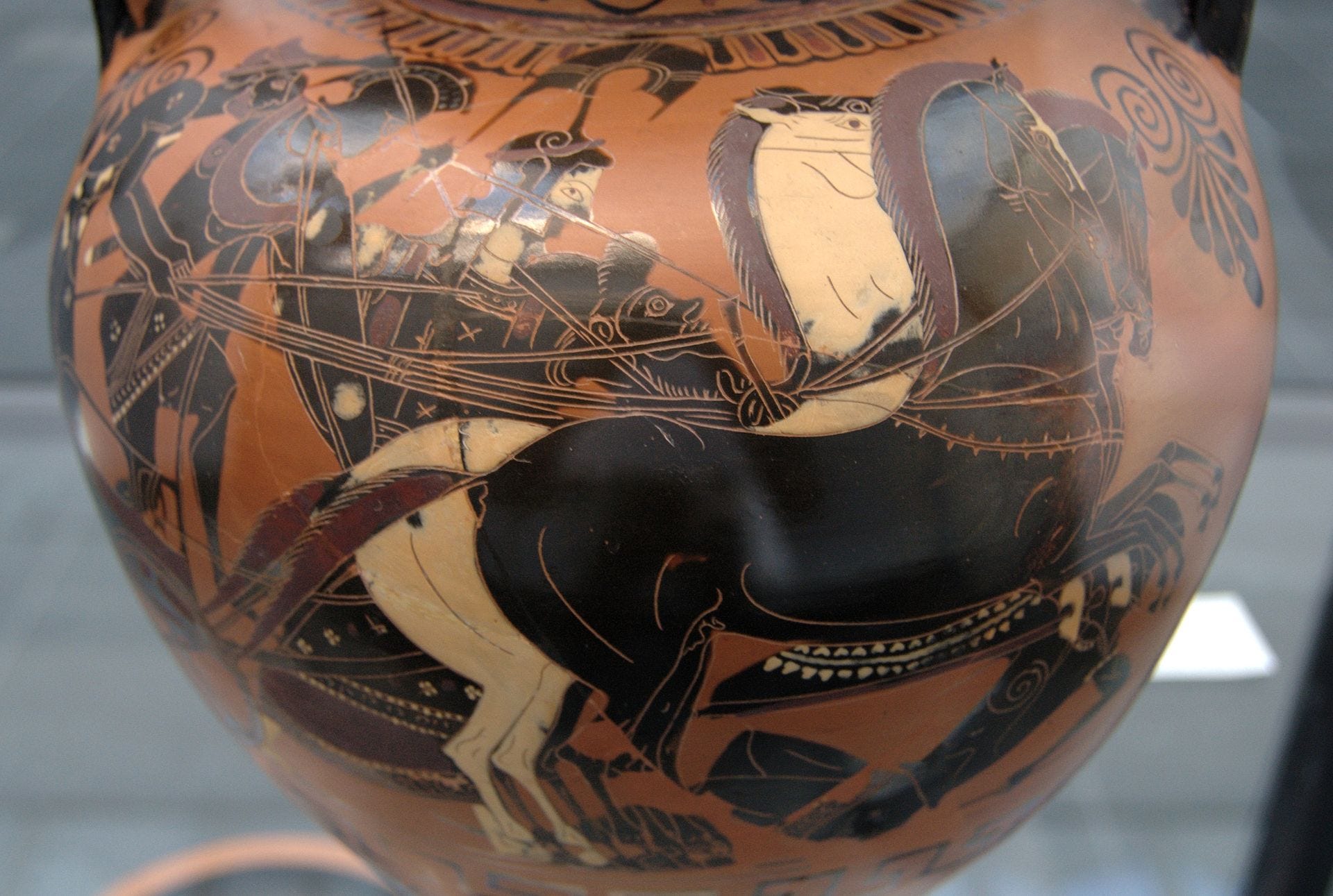
1. Mythological reference
In Greek myth, Phobos (fear) and Deimos (dread) ride beside Ares on the battlefield, amplifying panic before swords ever meet. Their power is anticipatory: armies falter not only from steel, but from stories told in their minds. The twins personify the emotions that precede conflict—a synergy of alarm (Phobos) and foreboding (Deimos) that can unmake courage or, when wisely channeled, sharpen prudence.
2. Parallel with AI and lesson from ancient mythology
Naming the twins in today’s debates
Public conversation about AI is propelled by both Phobos and Deimos:
Automation & job displacement (Phobos): Immediate, tangible fear of lost income, reskilling gaps, and regional disruption.
Systemic harm (Phobos⇄Deimos): Ongoing dread of bias, surveillance, misinformation, and concentrated power.
Existential risk (Deimos): Low-probability but high-impact scenarios that evoke deep foreboding and calls for precaution.
Left unexamined, these forces can stampede policy into overreaction—or paralyze it. The myth’s lesson is not to banish fear and dread, but to differentiate and direct them.
Lesson: convert anxiety into governance
Ancient storytellers recognized that acknowledging fear could restore order. Likewise, effective AI governance turns emotion into actionable structure:
Risk taxonomy: Separate near-term labor and safety risks from long-horizon existential risks; each demands distinct metrics, playbooks, and accountability.
Evidence over spectacle: Prefer audited evaluations, model cards, and incident reporting to demo theatrics—cooling Phobos with transparency.
Just transitions: Pair innovation with reskilling, mobility support, and shared productivity gains so automation’s fear becomes opportunity.
Safety & alignment: Invest in red-teaming, robustness, interpretability, and post-deployment monitoring to tame systemic dread.
Participatory design: Include workers, affected communities, and independent experts in oversight—diffusing dread with voice and consent.
As Adrienne Mayor reflects in Gods and Robots, myths warn that power without wisdom invites ruin; the cure is not denial, but rituals of accountability that channel fear into foresight.
3. Reflections and questions to consider
Signal vs. noise: Which of our organization’s AI risks are present and measurable, and which are speculative—and are we funding them accordingly?
Trust architecture: What disclosures, audits, and user controls would meaningfully reduce public fear rather than merely perform safety theater?
Workforce pact: How will we share productivity gains (time, wages, equity) to legitimize adoption and blunt displacement dread?
4. References
Iliad
Scenes where fear and panic precede battle—classical context for anticipatory risk and morale.Odyssey
A study in prudence and calculated caution, navigating between rash alarm and paralyzing dread.Adrienne Mayor, Gods and Robots: Myths, Machines, and Ancient Dreams of Technology
Links classical warnings about power to modern technological governance.Ulrich Beck, Risk Society
Framework for modern, distributed risk and the politics of uncertainty.Daniel Kahneman, Thinking, Fast and Slow
On cognitive biases that magnify fear and dread in public perception.Nick Bostrom, Superintelligence; Daron Acemoglu & Simon Johnson, Power and Progress
Contrasting lenses on existential and labor risks in technological change.NIST AI Risk Management Framework; Model Cards / Datasheets for Datasets
Practical tools to turn anxiety into auditable practice.